FAQs

Q: What makes these flashcards different?

A: Fonexa follows the science of reading and uses embedded pictographs (the image is built inside the letter), helping children connect letters to sounds. Each letter also includes a movement, creating a multisensory approach that helps sounds stick.

Q: Why do you teach sounds before letter names?

A: Reading is built on sounds, not letter names. Kids blend sounds to read words, so teaching sounds first helps them start reading sooner with less confusion. Letter names matter too—but sounds build the stronger foundation first.

Q: Why do you teach lowercase letters and not uppercase?

A: Children see lowercase letters most when reading. Books, sentences, and everyday text are mostly lowercase, so starting there makes sense. Once kids know lowercase letters and sounds, learning uppercase becomes much easier.

Q: Can teachers use Fonexa in the classroom?

A: Absolutely - Fonexa was designed by a teacher and works great in small groups or whole-class settings! We recommend our song "The Letter Sounds Song / La Canción de Los Sonidos" on YouTube. Repeat daily.

Q: What’s the difference between the small flashcards and the large cards?

A: Small flashcards are ideal for home use and work great for most kids at a standard learning pace. Large cards are great for classrooms or children who benefit from a more gradual learning approach.

Q: Can I return the item if it doesn't work for me?

A: Yes. Sure, if your product is damaged or doesn’t work as described, just reach out to us within 30 days of receiving the product, and you will get 100% of your money back.

Exceptional support. You can contact us by sending your message here: hello@fonexaedu.com


Q: How do I check the status of my order?

A: You will be emailed your receipt immediately after you place your order. Once your order has been shipped, you will receive your tracking number. At each step along the way, you can use it to see where your parcel is located by going to our Track Order page.

Q: Do you provide a quality guarantee for all the products being sold?

A: Absolutely! If you do not like the product or find damage to the product, contact us immediately! We do all we can to ensure your best shopping experience. You can simply contact us, and we'll get it addressed!

Q: How can I get in contact with you?

A: We handle customer service through email. You can contact us by sending your message here: hello@fonexaedu.com. Email us and let us know if you have any questions or concerns.

Q: How do I order on your website?

A: Simply select the offer above and click the 'Buy Now' button. Fill in your shipping and billing information, and we'll have your order shipped to you as soon as possible! Payment is secured by PayPal, Mastercard, Visa, and AMEX.

01

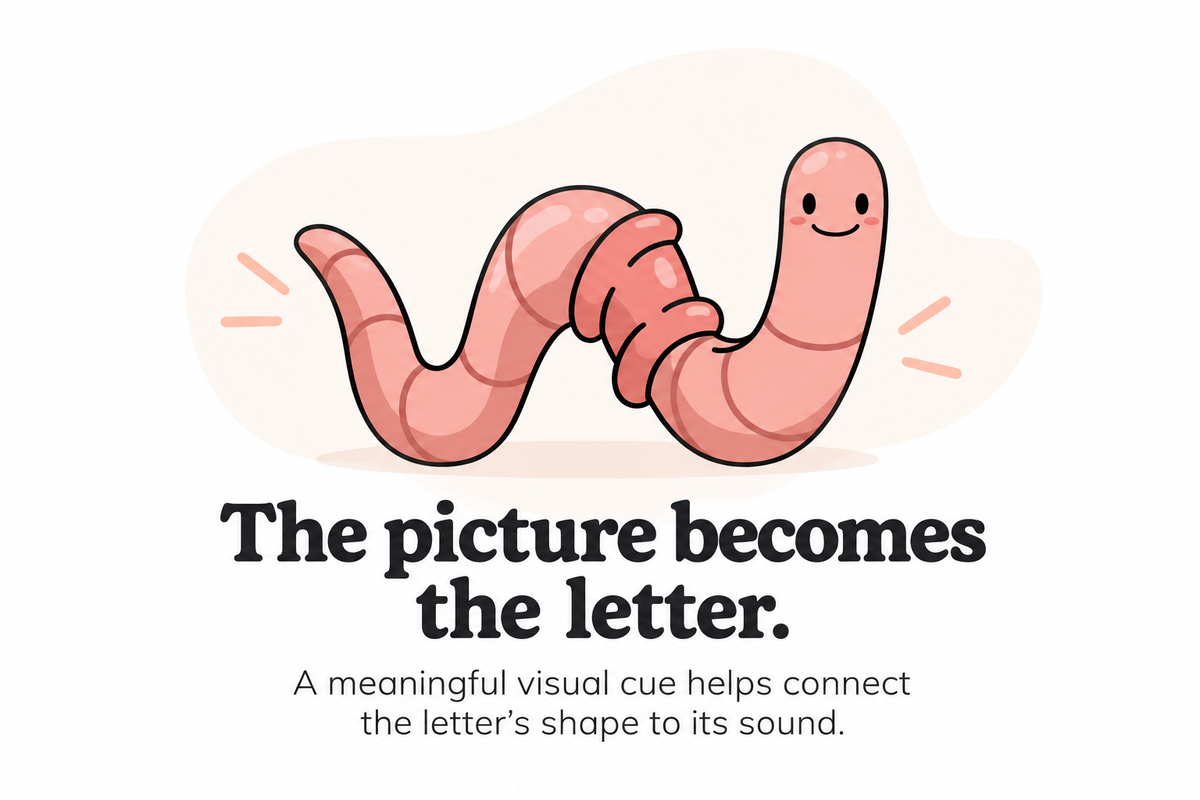
Embedded Pictograph Mnemonics

Instead of asking children to memorize a letter and its sound as two separate pieces of information, Fonexa embeds a familiar picture directly into the letter’s shape—creating a meaningful visual cue to help children remember the sound.

What the research shows

Studies have found that when pictures are integrated into the shape of a letter, children can learn and remember letter-sound connections more effectively than when pictures and letters are presented separately.

Linnea C. Ehri, Nancy D. Deffner & Lee S. Wilce (1984). Pictorial Mnemonics for Phonics. Journal of Educational Psychology, 76(5), 880–893.

Children taught with pictures integrated into the shapes of letters learned more letter–sound associations than children taught with separate pictures or no pictures.

View study ↗
02

Movement

Fonexa pairs sounds with simple movements, giving children another way to connect with and remember what they’re learning. By seeing, saying, and moving at the same time, learning becomes a multisensory experience.

What the research shows

Research suggests that pairing learning with meaningful gestures and movement can strengthen memory and recall. When children physically interact with what they’re learning, they create additional connections that can make new information easier to remember.

Marion Tellier (2008). The Effect of Gestures on Second Language Memorisation by Young Children. Gesture, 8(2), 219-235.

Young children who reproduced gestures while learning new words showed stronger recall of the vocabulary. The researchers concluded that performing gestures adds a motor component to learning that can create a richer memory trace. The study included 20 children with a mean age of 5 years, 5 months.

View study ↗

Susan Wagner Cook, Zachary Mitchell & Susan Goldin-Meadow (2008). Gesturing Makes Learning Last. Cognition, 106(2), 1047-1058.

Children who were required to gesture while learning a new mathematical concept were more likely to retain what they had learned. The researchers found that gesture played a causal role in helping make the newly learned knowledge last.

View study ↗
03

Phonological Awareness

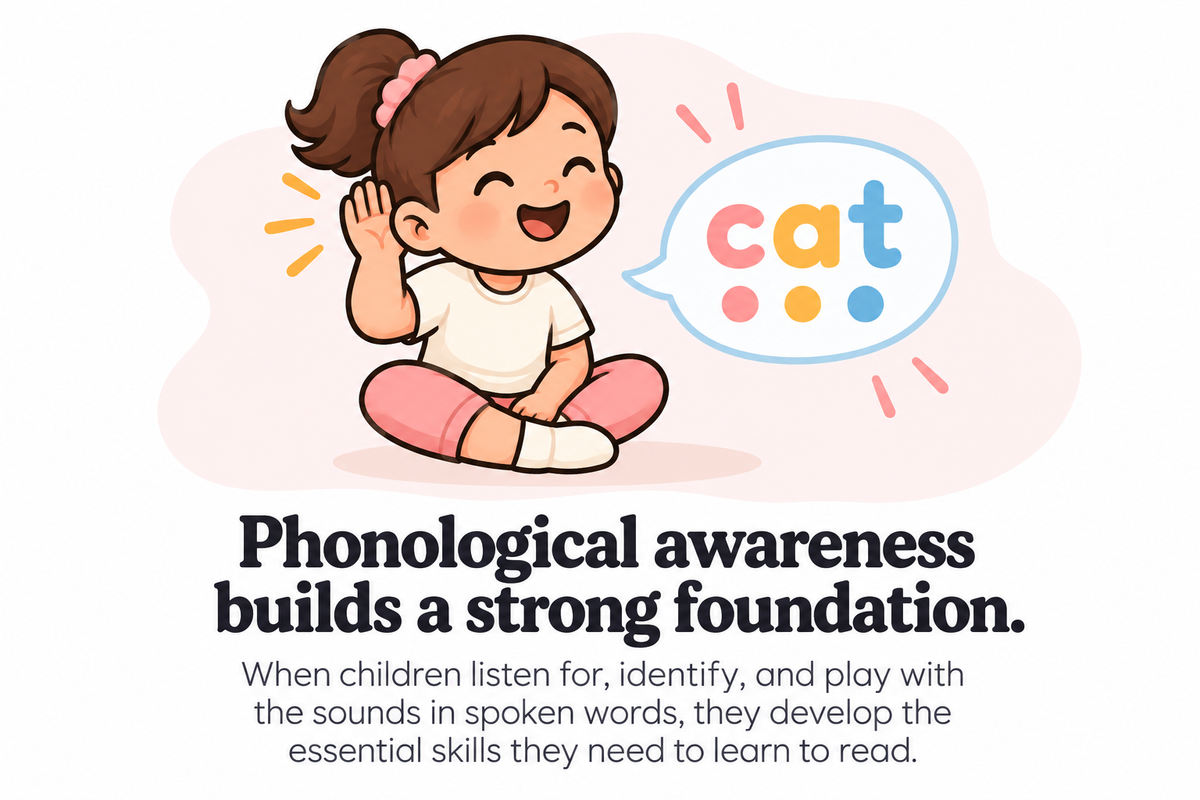
Before children can read words, they need to hear the sounds inside them. Fonexa builds phonological awareness through activities that help children listen for, identify, blend, and play with sounds—building an important foundation for learning to read.

What the research shows

Research has consistently linked phonological and phonemic awareness with learning to read. Explicit instruction that teaches children to notice and manipulate the sounds in spoken words can improve phonemic awareness and support later reading and spelling development. 

Linnea C. Ehri, Simone R. Nunes, Dale M. Willows, Barbara Valeska Schuster, Zohreh Yaghoub-Zadeh & Timothy Shanahan (2001). Phonemic Awareness Instruction Helps Children Learn to Read: Evidence From the National Reading Panel’s Meta-Analysis. Reading Research Quarterly, 36(3), 250-287.

A meta-analysis of 52 studies found that teaching children to identify and manipulate individual sounds in spoken words significantly improved phonemic awareness and also supported reading and spelling development.

View study ↗

Adriana G. Bus & Marinus H. van IJzendoorn (1999). Phonological Awareness and Early Reading: A Meta-Analysis of Experimental Training Studies. Journal of Educational Psychology, 91(3), 403-414.

Across experimental training studies, phonological-awareness instruction improved phonological skills and supported early reading development. Training that combined phonological awareness with letters was more effective than phonological training alone, showing the value of connecting spoken sounds with print.

View study ↗
04

Play-Based Learning

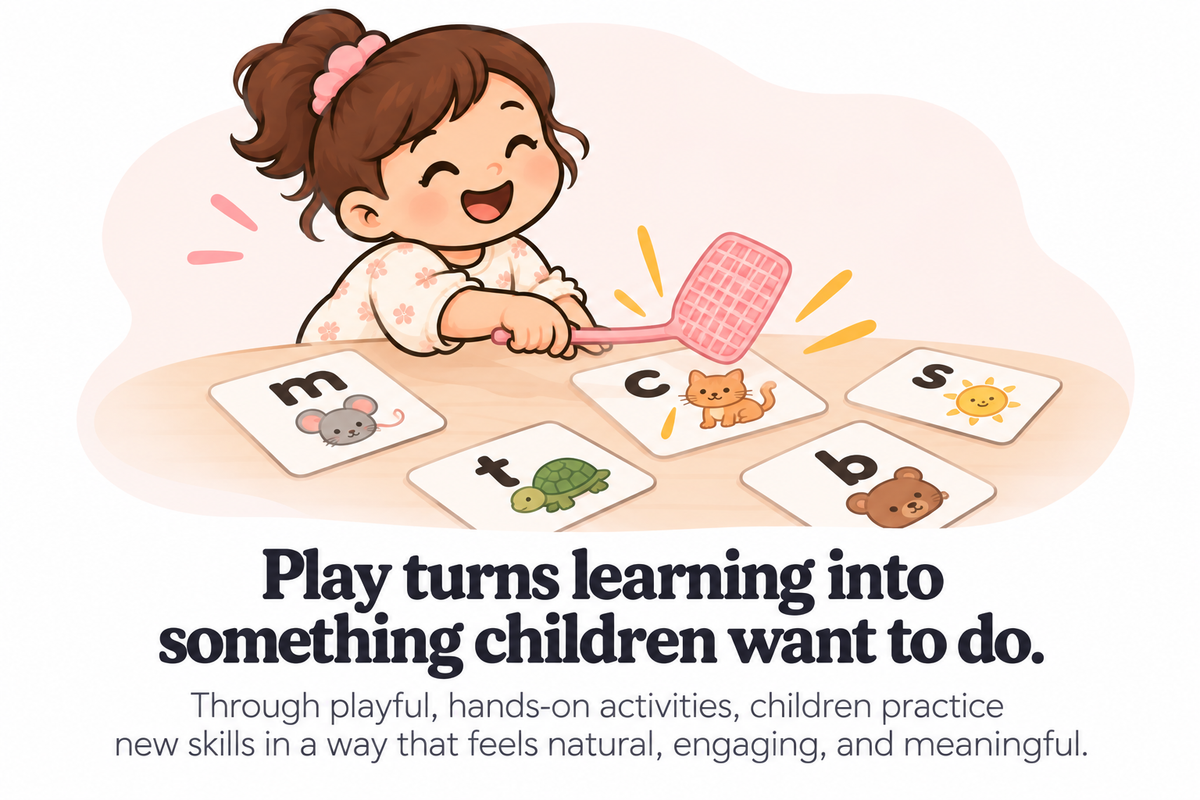
Fonexa turns early literacy practice into playful, hands-on activities with a clear learning goal. Instead of only asking children to memorize or repeat information, activities like Zap the Card give them opportunities to practice letter sounds and other early reading skills through active play.

What the research shows

Research suggests that play can be an effective setting for learning when activities are intentionally designed around a learning goal. Studies with preschool children have found that adult-supported play can support vocabulary development, while literacy-focused games have also produced gains in skills such as letter-sound awareness, alliteration, phonics, and vocabulary. 

Tamara Spiewak Toub, Brenna Hassinger-Das, Kimberly Turner Nesbitt, Hande Ilgaz, Deena Skolnick Weisberg, Kathy Hirsh-Pasek, Roberta Michnick Golinkoff, Ageliki Nicolopoulou & David K. Dickinson (2018). The Language of Play: Developing Preschool Vocabulary Through Play Following Shared Book-Reading. Early Childhood Research Quarterly, 45, 1-17.

Preschoolers learned new vocabulary through book reading followed by play. In the first experiment, children receiving adult-supported guided or directed play made greater vocabulary gains than children given free play with the same toys. A second study also found greater expressive vocabulary gains for words reviewed through play than for words reviewed with picture cards.

View study ↗

Kelly L. Schmitt, Lisa B. Hurwitz, Laura Sheridan Duel & Deborah L. Nichols Linebarger (2018). Learning Through Play: The Impact of Web-Based Games on Early Literacy Development. Computers in Human Behavior, 81, 378-389.

In a randomized study of 136 preschool and kindergarten children, children who played literacy-focused games for eight weeks outperformed the control group on 8 of 12 early-literacy measures. Improvements included lowercase-letter identification, letter-sound awareness and fluency, alliteration, phonics, and vocabulary, with especially pronounced learning in alliteration and phonics.

View study ↗
05

Lowercase Letters

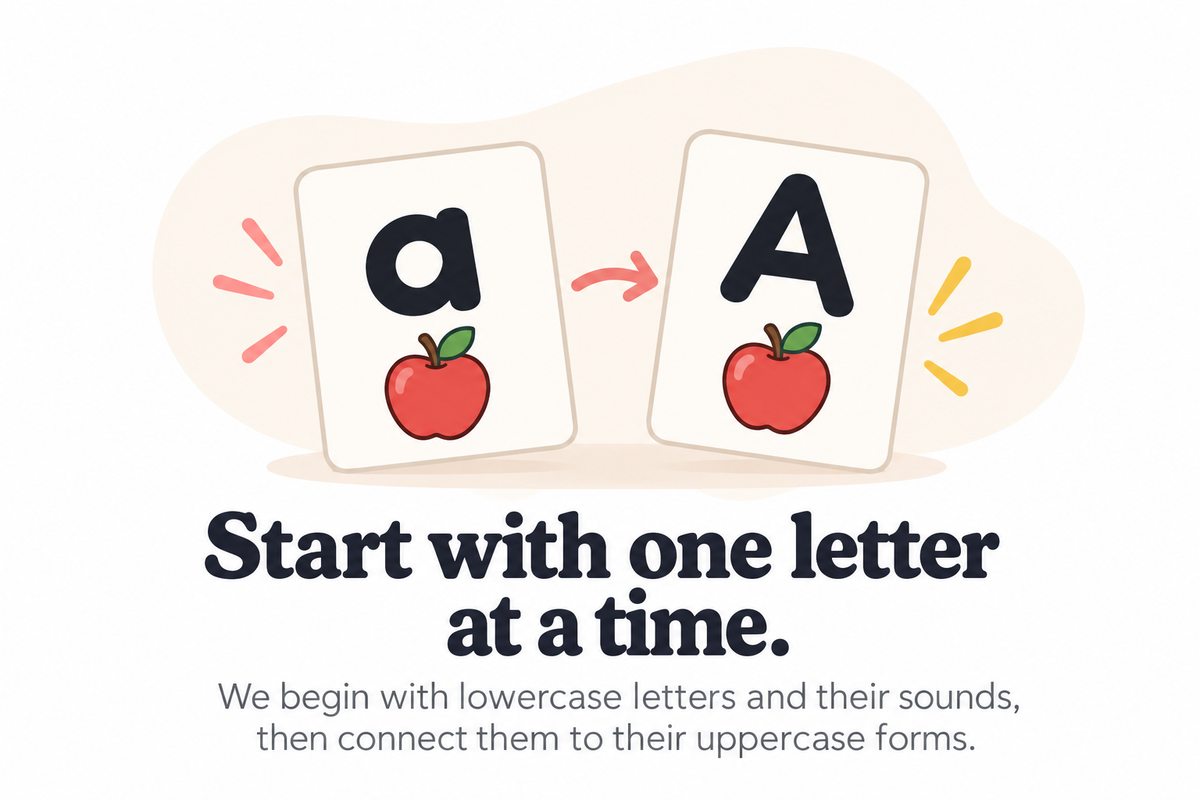
Fonexa introduces children to lowercase letters and their sounds first because lowercase letters are the forms they will encounter most often when they begin reading words, sentences, and books. Once children become familiar with these letter forms and their sounds, we help them connect each lowercase letter to its uppercase match.

What the research shows

Letters are abstract symbols. When children first begin learning the alphabet, they must learn that an unfamiliar visual form represents a particular letter and connects to a spoken sound. Uppercase and lowercase versions can also look very different—like A/a, G/g, or R/r—even though they represent the same letter.

Because lowercase letters are the forms children encounter most often in written words, Fonexa simplifies this early learning process by introducing one form first: lowercase. Once children are familiar with lowercase letters and their sounds, uppercase letters are introduced and connected to the letter knowledge they have already built.

This approach reduces the number of new visual forms children are asked to learn at one time while still working toward the ultimate goal: recognizing both uppercase and lowercase letters and understanding that they represent the same letters and sounds.

Somin Park & Shayne B. Piasta (2026). Alphabet Learning and the Uppercase Facilitation Effect. Annals of Dyslexia.

Children successfully learned lowercase letters through explicit instruction whether or not they already knew the corresponding uppercase forms. The researchers concluded that lowercase instruction should be introduced early and systematically rather than delayed until children master uppercase letters.

View study ↗

Nicholas E. Fears & Jeffrey J. Lockman (2020). Case- and form-sensitive letter frequencies in children’s picture books. Early Childhood Research Quarterly, 53, 370-378.

Lowercase letters are the forms children encounter most often in books. Researchers analyzing children’s picture books found that lowercase letters appeared nearly 18 times as often as uppercase letters, highlighting the importance of helping beginning readers become familiar with lowercase print.

View study ↗